BRADE GROUP · OIL & GAS KNOWLEDGE SERIES: Procurement, Logistics, and Supply Chain Series
How Supply Chain Management Decides Whether Nigeria’s Oil Industry Wins or Loses
By Fidelis Oghenede
Sinking one oil well in the Niger Delta is, before anything else, a feat of choreography. Hundreds of separate items must converge on a single remote spot in a precise sequence: casing steel rolled in China or Europe, drilling chemicals blended in Houston, a wellhead machined by a German valve maker, plus cement, logging tools, completion gear, and a small army of specialists drawn from half a dozen disciplines. Let any one of those pieces show up wrong, whether the wrong spec, the wrong day, or the wrong condition, and the whole operation grinds to a halt. Offshore, a single day of idle rig time can run into six figures, and depending on rig class, market conditions, and contract terms, may reach several hundred thousand dollars.
Supply chain management is the thing that keeps all of that in motion. In Nigeria’s petroleum industry it is no back-office chore. It is the line between a well drilled on schedule and a rig standing idle; between a pipeline that never corrodes because the inhibitor arrived on time and one that fails because it did not; and, in the end, between a country that captures the full value of its petroleum and one that watches that value drain away through delay, error, and dysfunction.
This is the story of that long chain: where it runs, where it snaps, and how Nigeria is beginning to mend it. The article moves through seven linked questions: how the chain is structured, why procurement and logistics are so decisive, where it most often breaks, how technology is reshaping it, what Dangote has changed downstream, where BRADE Group fits into the local-content story, and what must happen next for the chain to hold.
Key Takeaways
- Supply chain management is the industry. Nearly every barrel Nigeria produces depended on thousands of procurement and logistics decisions landing correctly, often months before the barrel was ever lifted.
- The chain runs on four core functions. Strategic procurement, logistics, inventory management, and category management each carry their own Nigeria-specific complications.
- Three fault lines dominate. Crude theft, decades of import-dependent refining, and port and customs bottlenecks account for the heaviest losses.
- The chain is being rebuilt in real time. Local content rules, digital tools, and the Dangote Refinery are reshaping the chain, but the job is not finished.
A Chain That Stretches Across the World
Somewhere in a warehouse in Shandong Province, China, a length of steel is sitting on a rack right now. It was rolled from a billet in a furnace, run through a quality-control lab, threaded at both ends to exacting API tolerances, coated in thread compound, and stacked alongside thousands of identical pipes. Its destination is an oil field in the Niger Delta. Between this moment and the moment it is finally run into a wellbore in Bayelsa or Delta State, it will ride a truck to a Chinese port, spend three or four weeks on a container ship crossing the Atlantic, clear Nigerian Customs at Onne or Apapa, wait its turn in a staging warehouse, pass a third-party inspection, and travel the last stretch by road, and sometimes by barge, to an operating base near the wellsite.
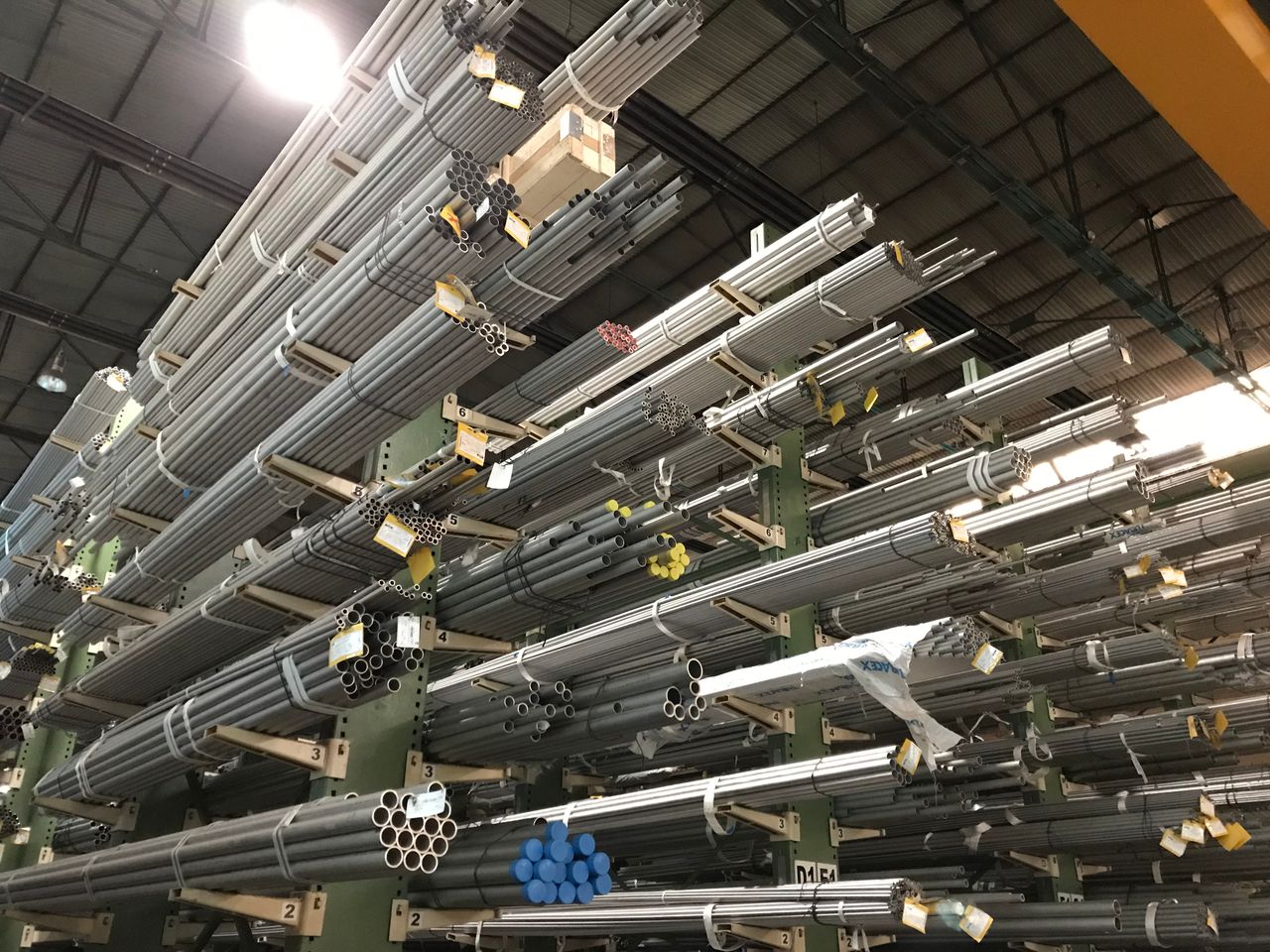
Every one of those steps is supply chain management. Every hold-up along the way costs money. Every slip in specification, paperwork, or handling has to be sorted out before the pipe can go downhole. And for every active drilling programme in Nigeria, hundreds of near-identical journeys are unfolding at the same time.
At bottom, the oil and gas industry is a supply chain business. But it is a supply chain business running at a scale, a level of technical complexity, and in an operating environment that set it apart from almost any other sector on earth. Grasp how that chain works, and where it comes apart, and you have gone a long way toward understanding the Nigerian petroleum industry itself.
Every barrel of crude Nigeria produces depended on thousands of supply chain decisions landing correctly, often months or years before the barrel was ever lifted. And every barrel lost to delay, theft, or a failed piece of equipment traces back to a supply chain decision that went the other way.
The Three Levels of Nigeria’s Oil and Gas Supply Chain
Nigeria’s petroleum supply chain is not one system but three connected systems, stacked on top of one another. Each level runs on its own logic, draws in its own set of players, and fails in its own particular ways, but a breakdown in one level quickly spreads pressure to the others.
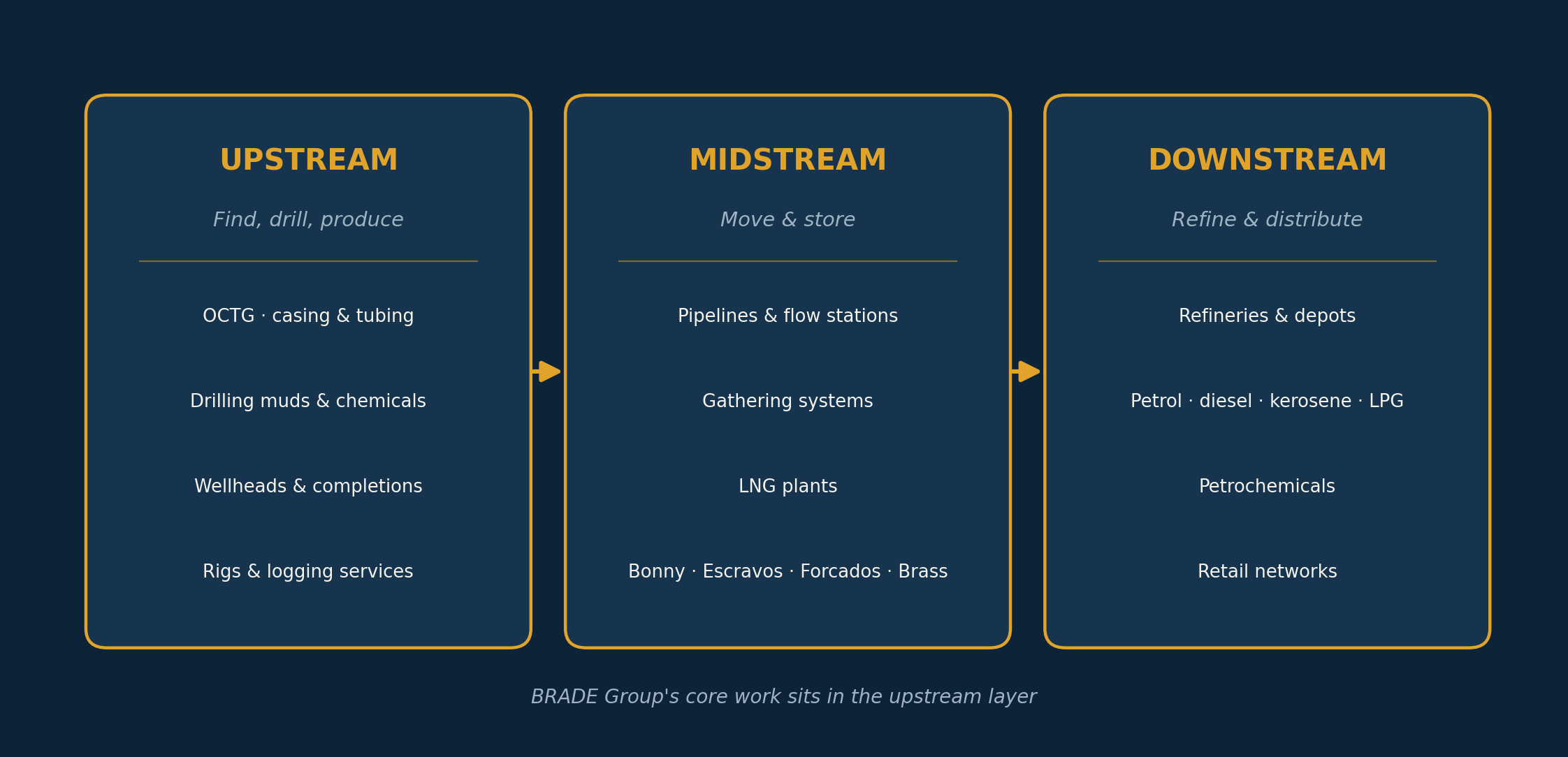
The Three Levels at a Glance
Upstream. Everything it takes to find, drill, and produce oil and gas: OCTG (casing and tubing), drilling muds and chemicals, wellhead equipment, completion tools, logging services, rigs, technical expertise, and the logistics to haul all of it out to operating sites that are often deep in the Delta. BRADE Group’s core work sits squarely here.
Midstream. The infrastructure and logistics that move crude and gas from producing fields to processing plants and export points: pipelines, flow stations, storage tanks, gathering systems, LNG plants, and the export terminals at Bonny, Escravos, Forcados, and Brass. How secure and sound this layer is decides how much of what gets produced ever reaches a buyer.
Downstream. The refining and distribution of finished products to the people who burn them: petrol, diesel, kerosene, LPG, and petrochemicals moving through refineries, depots, and retail networks to reach ordinary Nigerians. For most of the country’s post-independence history this level was defined by a single dysfunction: Nigeria exported crude and imported the refined products it needed. The Dangote Petroleum Refinery, which began turning out petrol in September 2024, is rewriting that story.

The Engine Room: Key Functions of Oil and Gas SCM
Supply chain management in oil and gas rests on four core functions: strategic procurement, logistics, inventory management, and category management. Each is technically demanding, and each, in Nigeria, comes wrapped in complications that no textbook ever prepared anyone for.
Strategic Procurement: Buying Well in a Hard Market
In Nigeria’s oil and gas sector, procurement is never simply a hunt for the cheapest supplier. It means finding one who can hit precise technical specs (often governed by API, ISO, or ASTM standards), deliver on time to a location that may only be reachable by boat, produce quality documentation solid enough to survive regulatory scrutiny, and satisfy a local-content regime that keeps ratcheting up the required level of Nigerian participation.

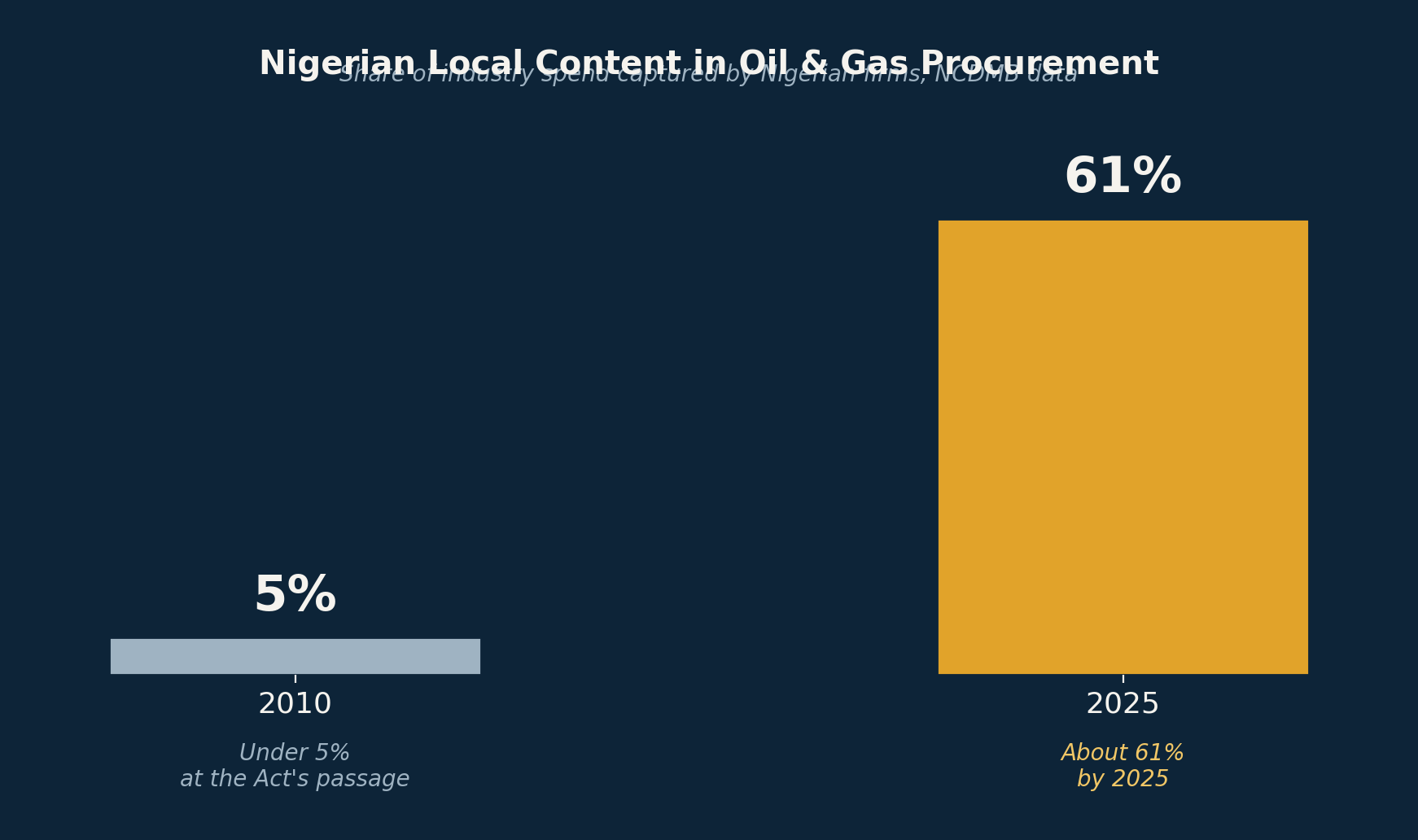
The Nigerian Oil and Gas Industry Content Development Act of 2010 sets the rules of that game. Administered by the Nigerian Content Development and Monitoring Board, it obliges operators to look first to Nigerian firms, and to goods made on Nigerian soil, whenever they buy. The results have been striking: NCDMB reports that local participation in the industry has climbed from under 5 percent when the Act was passed to about 61 percent by 2025, a shift that has moved billions of dollars of spend from foreign suppliers to Nigerian engineering, fabrication, and services companies.
But policy and procurement reality do not always move in step. Nigeria still cannot manufacture many critical items at home; OCTG, specialist drilling equipment, certain chemicals, and precision instrumentation all have to be bought abroad. That international buying carries three compounding burdens. There is currency risk, since gear priced in US dollars has to be paid for in a naira that slid from roughly NGN 400 to the dollar in 2021 to well past NGN 1,500 by 2025. There are import duties, which can pile 5 to 15 percent onto the landed cost. And there are lead times that routinely stretch 8 to 16 weeks from placing an order to taking delivery in Nigeria, which means procurement planning has to start long before the equipment is actually needed.
Logistics: Moving Materials Through a Watery World
The Niger Delta is one of the toughest operating environments in the world to move things through. A sprawling web of rivers, creeks, swamps, and mangrove forest, laced with islands and coastal settlements, means a large share of oil and gas logistics leans on marine transport. Supply boats, barges, and helicopters are the main way people and materials reach offshore platforms and many onshore sites. A barge that grounds itself in a shallow creek does not just miss a delivery; it can stall an entire drilling programme.
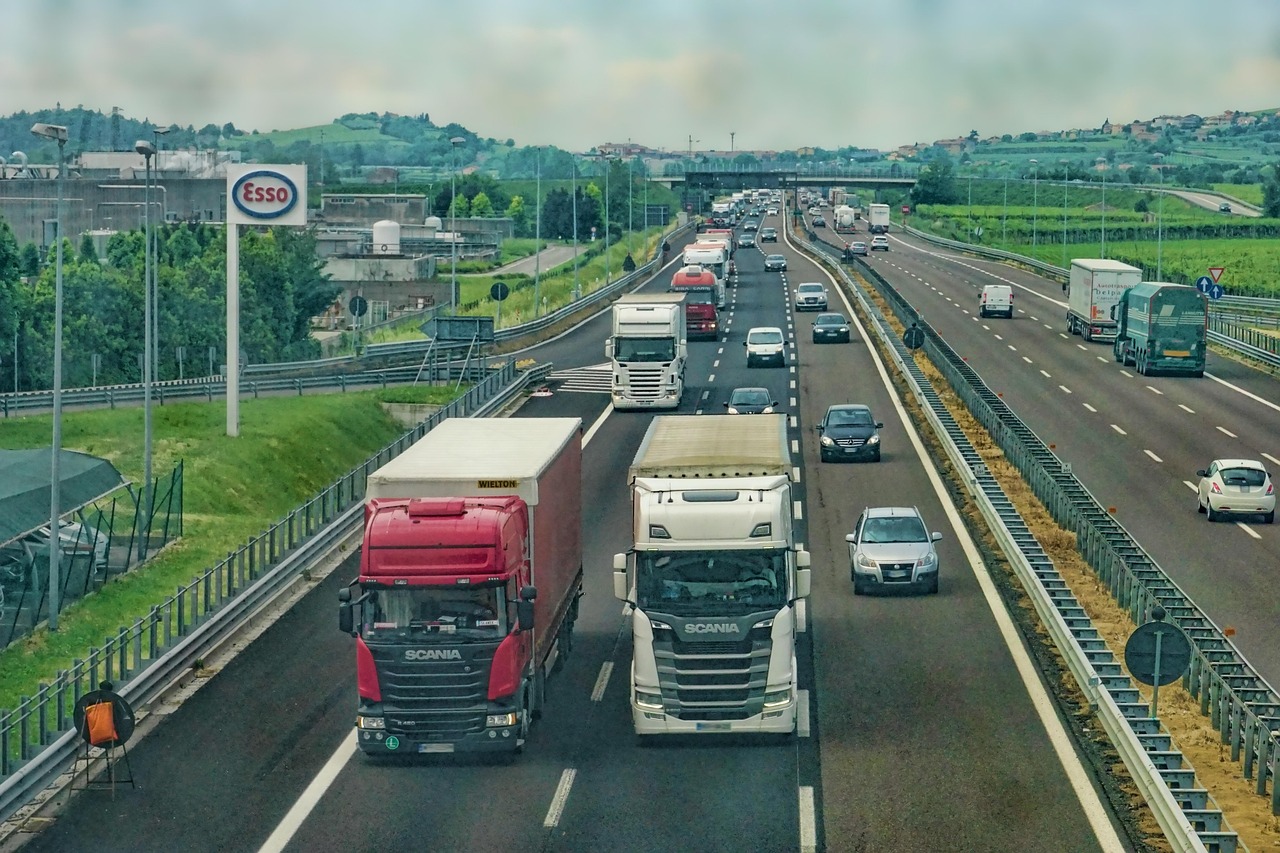
On the roads, Nigeria’s highway network, especially across the Delta states, brings its own troubles: crumbling surfaces, patchy fuel supply, security worries on certain corridors, and the near-total lack of any reliable rail freight. Getting logistics right therefore calls for careful route management, ready alternatives across transport modes, and security arrangements that sometimes stretch to armed escorts or coordination with the military.
Most of the majors and service companies working in Nigeria run their materials through the Onne Oil and Gas Free Zone near Port Harcourt, where customs is comparatively streamlined, warehousing is purpose-built for the sector, and barge and road links reach out across the Delta. BRADE Group’s own logistics are based at Onne, which allows faster clearance and steadier delivery than would ever be possible through a general commercial port.
Inventory Management: Walking the Stockout Tightrope
Between the long lead times on imported materials and the ruinous cost of downtime when a critical part is missing, inventory management ranks among the most commercially loaded functions in Nigerian oil and gas. The whole game is a balance between two expensive ways to fail: holding too much stock, which locks up working capital in parts that may never be used, and holding too little, which stops production cold when a pump gives out at two in the morning and the spare is nowhere on site.
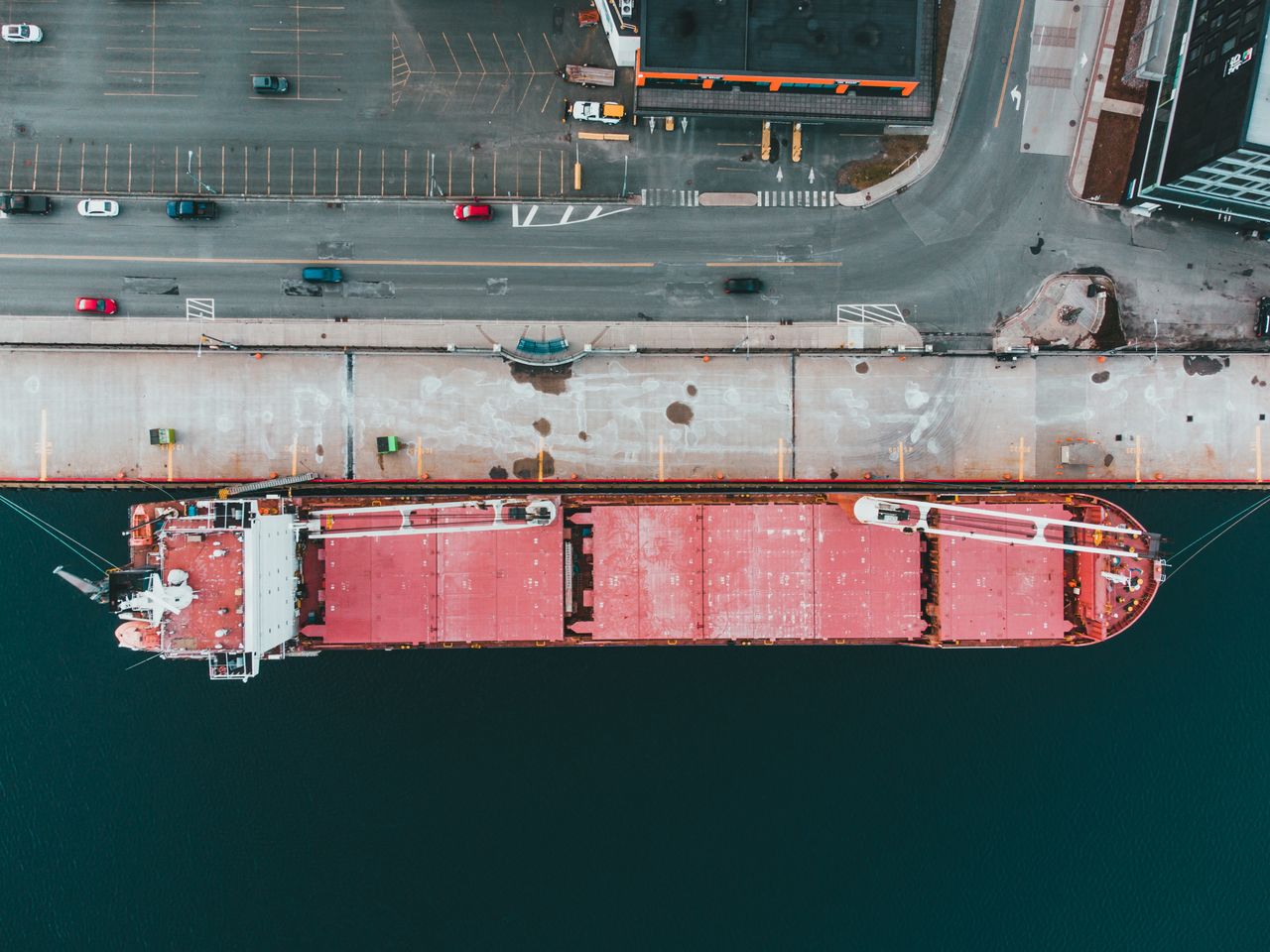
The tools for walking that line have come a long way. Critical Spares Lists capture the high-value, long-lead items that simply must be on the shelf, because the damage from their failure is too severe to gamble on international resupply. Min/Max levels set automatic reorder triggers keyed to how fast an item is consumed and how long it takes to replace. Vendor Managed Inventory hands the stock-holding job to the supplier, who keeps agreed quantities at the operator’s site and tops them up as they are drawn down. And consolidation centres, such as the logistics bases at Onne, act as staging points where international shipments are received, inspected, and split into delivery packages bound for several operating sites at once.
Category Management: Seeing the Whole Picture
Category management is the discipline of looking at procurement not one transaction at a time, but across whole spend categories: OCTG, drilling chemicals, wellhead equipment, logistics services. Once a team truly understands the full picture in a category, who the suppliers are, how the market behaves, and what the technical requirements insist on, it can make strategic calls about standardisation, supplier consolidation, and contract design that no one-off negotiation could ever deliver.
OCTG standardisation is the textbook example. When an operator locks its casing and tubing down to common grades, sizes, and thread types across a whole well inventory, it needs fewer suppliers, buys more from each of them, simplifies the warehouse, and lays the groundwork for volume pricing that can cut unit costs sharply. BRADE Group has helped clients get there through structured well-programme reviews that align OCTG specs across several wells before any buying starts, rather than treating each well as its own separate scramble.
Chemical supply rationalisation tackles a familiar Nigerian habit: operators piling up dozens of near-identical chemical products for similar jobs across different fields, frequently from different suppliers on separate contracts. Consolidating down to fewer, better-understood products from fewer, better-vetted suppliers trims both the management load and the risk of taking substandard product from an underqualified vendor.
Where the Chain Breaks: Nigeria-Specific Challenges
Every country’s oil and gas supply chain has its quirks. Nigeria’s carry a character and a severity that call for plain acknowledgement. Three, in particular, tower over the rest.
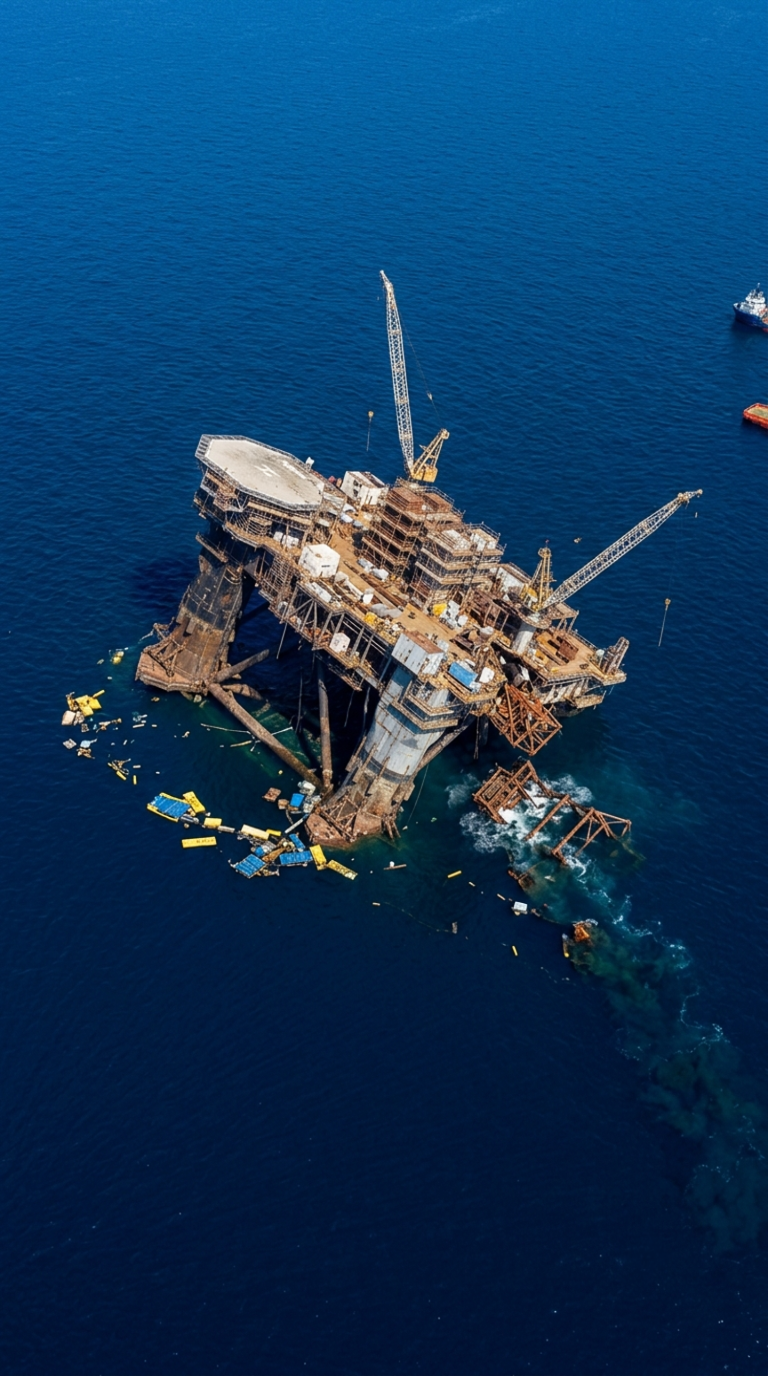
The Theft Crisis: Trillions, and Still Counting
Nigeria’s petroleum supply chain is contending with crude theft on a scale that has almost no equal anywhere in the world. A 2026 peer-reviewed study in the International Journal of Research and Innovation in Social Science estimated that theft, illegal tapping, and rigged metering drained crude worth around N8.41 trillion out of the system between 2021 and 2025. That figure is contested. The upstream regulator has publicly pushed back, arguing that the calculation converted earlier-year losses at a much weaker current exchange rate rather than the exchange rates that applied in those years, and that by late 2025 the country was losing less crude per day than at any point since 2009. Whichever number one accepts, the underlying point holds: crude theft is not a rounding error but a structural failure of the supply chain, and it has drained extraordinary value from Nigeria over the past five years.
The theft bites at several points along the chain. Hot taps drilled into pipelines pull crude straight out of the flow. Fiscal metering is rigged to understate the volumes loaded at export terminals. At flow stations, the produced volumes reported to regulators drift away from the volumes actually entering the gathering system. Each leak is at once a financial loss and a breach of supply chain integrity: the link between reservoir and buyer has been compromised, and the data that should describe the transaction has been quietly corrupted.
The industry’s answer has paired physical security, including pipeline surveillance contracts, deep burial of exposed sections, and community-based monitoring, with better measurement technology, including fiscal-grade allocation meters and satellite tracking of export terminals. NNPC’s integrated security model, widely credited with helping Nigeria’s crude output climb back from a low near 960,000 barrels a day in 2022 to roughly 1.71 million barrels a day by mid-2025, shows that the tools to fight this exist. Deploying them evenly across every last piece of producing infrastructure is the work still to be done.
The Refining Dysfunction: Decades of Imported Product
For most of its petroleum history, Nigeria exported crude and then turned around and imported the refined products its own citizens needed. Petrol, diesel, kerosene, LPG: all of it arrived on tankers from European refineries, bought in US dollars at import-parity prices that bore no relation to the fact that Nigeria was sitting on some 37 billion barrels of the very raw material those products were made from.
The country’s four state-owned refineries, one each at Warri and Kaduna and a pair at Port Harcourt, were built to process 445,000 barrels a day between them. For most of the past two decades their actual output has been a fraction of that, as thin maintenance, funding gaps, and governance troubles kept them idling at a sliver of capacity or shut altogether.
The downstream chain that grew up to fill the gap was, by necessity, an import chain: international traders sourcing product from European and Asian refineries, shipping lines delivering into Lagos and Port Harcourt, and distributors trucking fuel across Nigeria’s threadbare road network to filling stations. Every link in it was priced in dollars, which loaded the whole system with foreign-exchange pressure and tied the domestic pump price directly to international crude prices and the naira rate.
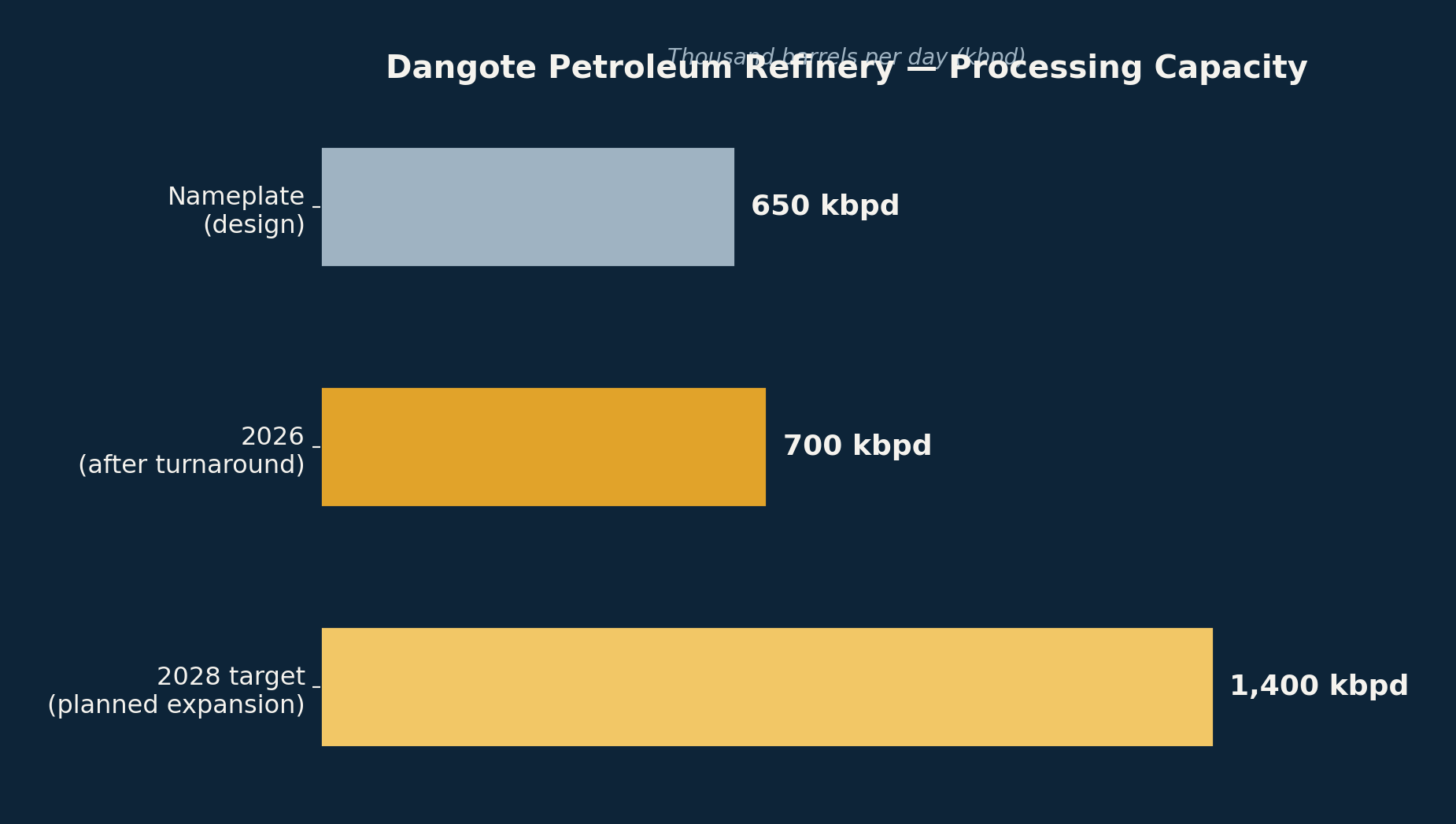
In September 2024, the Dangote Petroleum Refinery changed the arithmetic. Its Euro-5 petrol was the first meaningful domestic supply of refined product in decades. By the close of 2025 the refinery was feeding roughly 113,000 barrels a day of petrol into the local market, close to 36 percent of daily national demand. A planned turnaround in early 2026 then coaxed the crude distillation unit from 650,000 up to 700,000 barrels a day, enough to move the plant into eighth place among refining complexes worldwide.
For the first time in a generation, a barrel of crude drilled in Nigeria can be refined in Nigeria and sold as petrol to a Nigerian motorist without ever crossing an international border. That is more than a supply chain milestone. It is a statement about the industrial capacity Nigeria can build when capital, policy, and execution line up.
Port and Customs: The Bottleneck That Costs Billions
Equipment that clears quality control at a Chinese mill, survives loading at a port in Tianjin, and rides five weeks across the Atlantic can still sit in Nigerian Customs for weeks or months. Congestion at Apapa in Lagos has, at times, been bad enough to add weeks to a delivery. Documentation rules are intricate, open to interpretation, and not always applied the same way twice. Tariff classifications for specialised oil and gas equipment are contested often enough that seasoned operators now budget deliberately for customs disputes as a line item of supply chain cost.
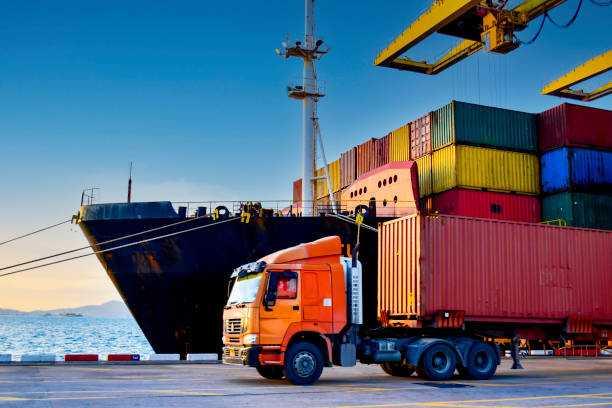
The Onne Oil and Gas Free Zone takes some of the sting out of this. Running under OGFZA, the Oil and Gas Free Zones Authority, Onne offers customs procedures built specifically for petroleum imports, with dedicated warehousing and direct links out to operating areas. Most serious upstream operators in Nigeria treat Onne as their main international gateway; those who do not tend to pay a heavy premium in both time and money at the general commercial ports.
The Customs-Clearance Risk Calculation
When an operator plans a well programme in Nigeria, the standard 8-to-16-week procurement lead time for OCTG from international mills has to be padded with a Nigeria-specific customs buffer that experienced supply chain teams build straight into the schedule. Equipment that misses its drilling window because it is stuck in customs is not just a delivery headache. It can push back a whole drilling campaign, with rig standby running at USD 100,000 to USD 500,000 a day. The fix is not complicated: buy early, get the documentation complete, prepare for pre-clearance, and work with a logistics partner who has established relationships at Onne and Apapa. What it takes is planning discipline, and that is precisely what many operators, squeezed by project pressure, fail to apply consistently.
The Technology Revolution: How Digital Tools Are Reshaping SCM
The supply chain technology now within reach of Nigerian operators is in a different league from what existed ten years ago. Three tools in particular are remaking how the sharpest operators run their chains.
ERP Systems: The Operational Backbone
Enterprise Resource Planning systems, SAP, Oracle, and the alternatives around them, have become the operational spine of supply chain management for Nigeria’s major operators. Done properly, an ERP rollout pulls the purchasing ledger, the warehouse count, the shipping schedule, the accounts, and the maintenance log onto one screen, so a manager can tell at a glance what has been ordered, what has landed, what is gathering dust on a shelf, what has been used up, and what is due for reorder.
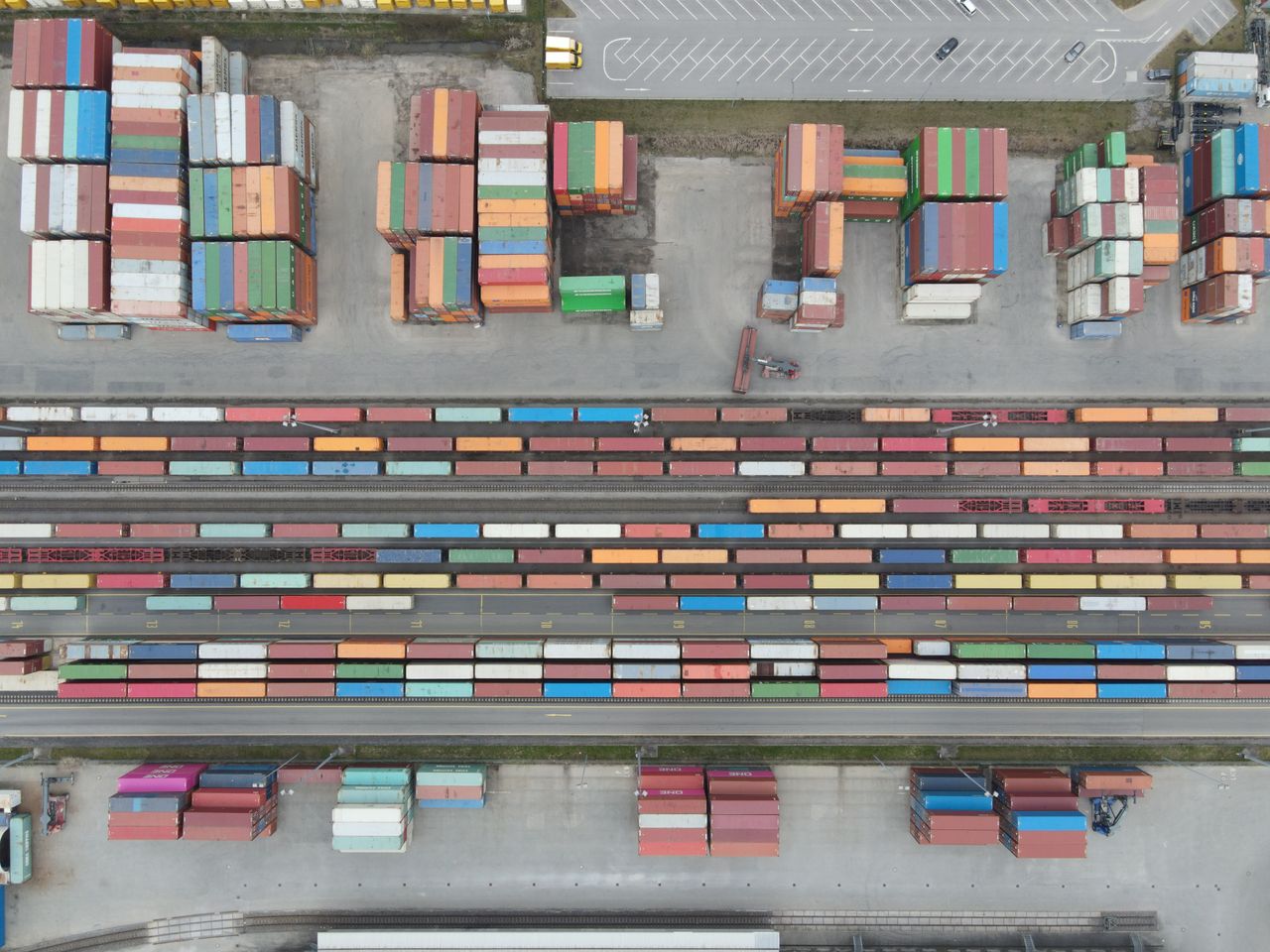
For an operator juggling critical spares across several sites, that live view is commercially decisive. It heads off duplicate ordering, where one field buys a spare that already sits in another field’s warehouse; it flags slow-moving stock quietly eating working capital; and it fires the reorder triggers that keep operations running without the wasteful over-stocking that plagues a poorly run warehouse.
AI-Driven Demand Forecasting: Anticipating the Need Before It Arrives
Artificial intelligence does something in the supply chain that no human planner can reliably manage: it chews through large datasets spanning past consumption, drilling schedules, production forecasts, seasonal weather, and price signals, and returns procurement recommendations that weigh all of those variables at once.

For OCTG buying in Nigeria, where orders have to go in 8 to 16 weeks ahead of need, AI-driven forecasting is the difference between a well programme with its pipe ready on time and one left waiting on a shipment that was ordered too late. Research presented at the 2025 International Conference on Computational Intelligence and Knowledge Economy put a number on the stakes. Citing Kimberlite’s widely referenced industry research, it noted that losing even 1 percent of the year to unplanned stoppages, about three and a half days, already erases upwards of USD 5 million for a typical operator, and that materials failing to arrive is one of the commonest ways those days get lost.
Blockchain: Solving Nigeria’s Trust Problem
Counterfeit OCTG stamped with fake API marks has turned up in this market. Mill Test Certificates have surfaced with no connection to the steel heats they claim to describe. Crude-export metering disputes are routine. Against that backdrop, blockchain answers a very particular Nigerian need: a transaction record that everyone shares, no one owns, and nobody can doctor after the fact.
The technology works like a ledger copied to every participant at once. Each new entry, whether the mill’s quality test, the shipping confirmation, or the customs release, is stitched cryptographically to what came before it, and every approved party holds the same record. Tamper with one page and the mismatch exposes the attempted forgery. For crude-export paperwork, certificate-of-origin checks, and OCTG traceability, that built-in resistance to quiet rewriting is precisely what the Nigerian chain has been missing.
The Dangote Transformation: Before, During, and After
The Dangote Petroleum Refinery at Lekki, Lagos, is not merely a refinery. It is the single most consequential supply chain intervention in Nigeria’s petroleum history, and its effects refuse to stay penned inside the downstream sector. They ripple through every level of the chain: how crude is allocated at home, what the midstream logistics network has to look like, and where Nigeria will sit in regional energy trade for the next generation.
The table below lays out the before-and-after of Dangote’s commissioning across the key dimensions of Nigeria’s petroleum supply chain.
| Dimension | Before Dangote | After Dangote | Net Effect |
|---|---|---|---|
| Crude supply to refinery | Imported from international markets | Domestic crude obligation under PIA 2021; naira crude arrangement | Cuts foreign-exchange outflow on crude procurement |
| Petrol for domestic use | Imported mainly from Europe | Dangote supplying the home market; averaging ~113,000 bpd through 2025 | Reduces import dependence; saves foreign exchange |
| Product pricing | Set by import parity; volatile, dollar-based | Naira-denominated pricing, though still tied to global crude | Currency-stability gains; still exposed to global swings |
| Export potential | Nigeria exported crude, imported product | Dangote beginning to export refined product to regional African markets | New revenue stream; narrows the trade deficit |
| Logistics infrastructure | Geared to crude-export terminals | Rising demand for crude-to-refinery and product-distribution logistics | New supply chain investment needed across mid and downstream |
| Refinery capacity | 445,000 bpd (four state refineries, rarely achieved) | 700,000 bpd at Dangote, with a 1.4m bpd expansion planned | Room to meet full domestic demand and export the surplus |
The transformation is real, but it is not finished. A 2025 peer-reviewed study in the Jalingo Journal of Social and Management Sciences found that while Dangote’s supply chain practices have genuinely sharpened resource use inside the refinery, they still run into hard external limits: uneven domestic crude supply, gaps in the product-distribution infrastructure, and regulatory frictions that will need policy attention to clear.
The Federal Executive Council’s naira crude arrangement was a genuinely inventive piece of policy: NNPC invoices Dangote for crude in the local currency, and is repaid not in cash but in petrol and diesel destined for Nigerian forecourts. But putting it into practice has been bumpy. In November 2024, Dangote said NNPC had fallen short of the agreed minimum of 385,000 barrels a day. That gap between intent and execution captures a problem that runs through every level of Nigeria’s petroleum supply chain: the distance between what the framework promises and what actually happens on the ground.
The Dangote Effect in Numbers
Processing capacity: 700,000 barrels per day after the 2026 turnaround, against a 650,000 bpd nameplate, with a stated ambition of 1.4 million bpd by 2028.
Petrol into the domestic market through 2025: about 113,000 barrels per day, roughly 36 percent of national demand.
First refined-product exports: petrol shipped to regional African markets from 2025: the first time in Nigeria’s history it exported meaningful volumes of refined product.
Crude sourced internationally in 2025: around USD 3.74 billion of foreign crude imported to cover shortfalls in domestic allocation, a stark measure of the gap between the refinery’s appetite and what the domestic crude chain could reliably feed it.
BRADE Group: An Indigenous Supply Chain Built for Nigeria
BRADE Group’s own story is, in miniature, a demonstration of what the Nigerian Content Act set out to make possible: an indigenous company that has built real technical capability in a demanding sector and competes head-to-head with international service firms on expertise, relationships, and operational discipline, not on any preferential treatment.
BRADE’s OCTG division has delivered more than 2.5 million feet of casing and tubing to Nigerian upstream operators since 2012, serving clients that include SEPLAT, Platform Petroleum, Elcrest, and Eroton across the Delta’s producing fields. The supply chain behind those deliveries is genuinely global: sourcing relationships with Shandong Molong, TPCO, and China Vigor in China; VATubulars in Austria and ArcelorMittal in Europe; and OMK in Russia, all coordinated out of Port Harcourt by a Nigerian team.
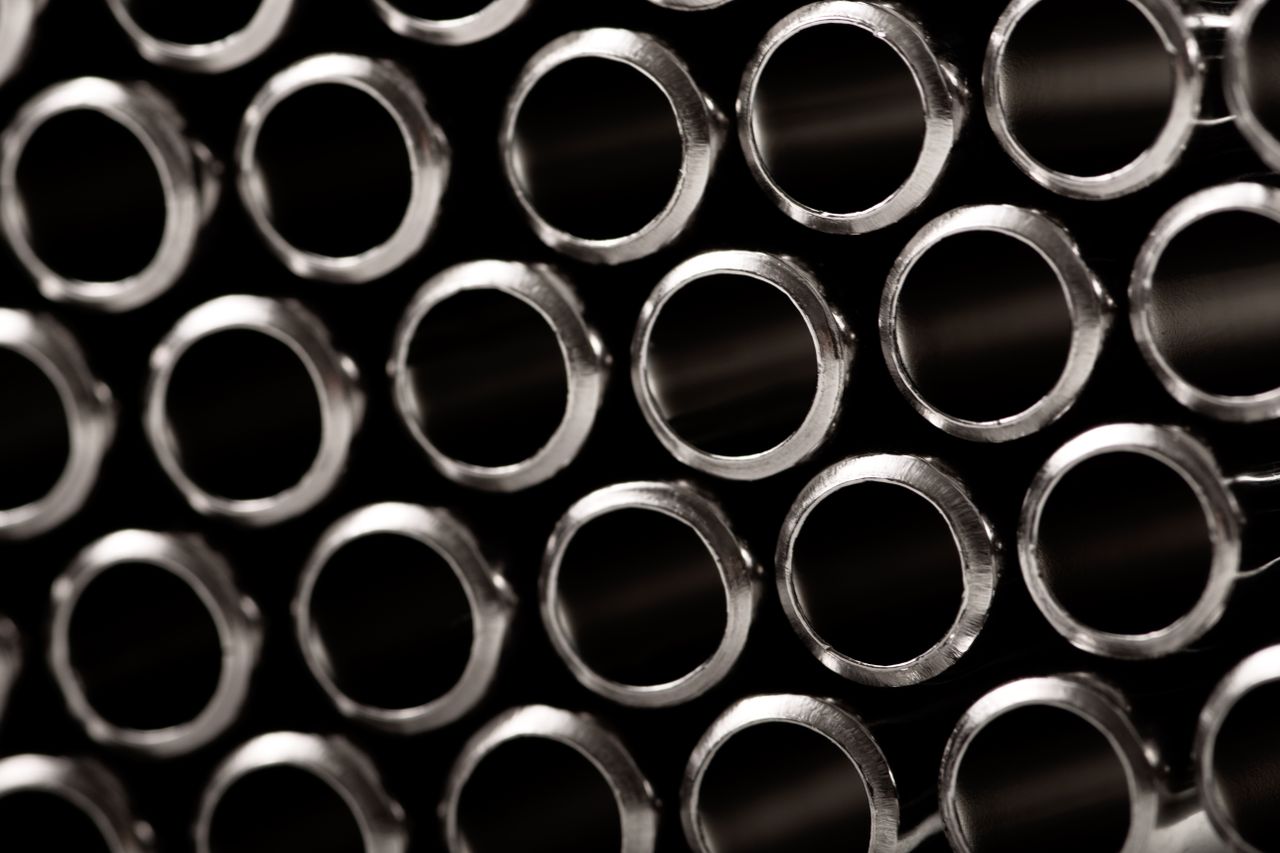
That combination, international sourcing paired with Nigerian operational know-how, answers the core challenge of OCTG supply in the country. Foreign mills can make the pipe, but they do not necessarily know which NUPRC-approved specification applies to a given well programme, which Nigerian Customs commodity code fits a particular pipe dimension, or which third-party inspection agency turns work around fastest at Onne. Operators who buy straight from the mills tend to learn these things the expensive way. BRADE Group’s value is the accumulated knowledge of how to navigate that space reliably, at scale, and with documentation that holds up under regulatory scrutiny.
Nigeria has the resources. It has the reserves. It has more than enough petroleum wealth to fund a generation of development. What it needs is the supply chain capability to turn that wealth into delivered value, reliably, every day, without the losses that have marked too much of its petroleum history.
The Chain That Must Hold
Supply chain management in Nigeria’s oil and gas industry is on the move. The technology is better. The regulatory framework, flawed as it remains, offers more levers for accountability than it did a decade ago. The Local Content Act has raised up a generation of Nigerian companies with real supply chain muscle. The Dangote Refinery has rewritten the terms of downstream supply. And the recovery in national output, from 960,000 barrels a day in 2022 to about 1.71 million by 2025, shows at the largest possible scale what better supply chain and infrastructure management can deliver.
But the job is not done. Crude theft remains large enough to count as a national emergency. Port and customs infrastructure still imposes costs and delays that Nigerian operators swallow and international investors notice. The naira’s slide keeps feeding procurement-cost volatility that planning discipline alone cannot fully tame. And domestic crude supply to the Dangote Refinery, the linchpin of the whole downstream shift, has stayed inconsistent enough that the refinery has had to import significant volumes of foreign crude just to keep running.
Every one of these is a solvable problem, and the solutions are known. What they demand is political will, regulatory consistency, and investment discipline across a sector that has too often taken the short-term convenient path over the long-term systemic fix.

The chain that runs from a steel billet in Shandong to a wellbore in the Niger Delta, and from a barrel of crude in the Delta to a motorist’s tank in Lagos, passes through thousands of decisions, dozens of organisations, and several regulatory regimes. When every link holds, Nigeria earns. When any link gives way, Nigeria loses.
Supply chain excellence is not a supporting act in Nigeria’s oil and gas industry. It is one of the conditions that determines whether the industry works at all. Every barrel produced, every well drilled, and every product refined depends on it working. Building that excellence may be one of the most consequential infrastructure projects Nigeria can undertake.
Glossary: Plain-Language Guide to Key Terms
A quick guide to the technical vocabulary in this article, written for readers new to supply chain management in the oil and gas industry.
- Supply Chain Management (SCM): Everything involved in planning, buying, moving, storing, and delivering what an oil and gas business needs to run. In Nigeria that thread runs from casing ordered off a Chinese mill, through helicopter rosters for offshore platforms, all the way to petrol tankers rolling out to filling stations in all 36 states.
- OCTG (Oil Country Tubular Goods): Shorthand for the steel pipe that actually goes into a well: casing, tubing, and drill pipe. Few things an upstream operator buys cost more or tolerate less error, which is why the category answers to API Specification 5CT and travels with a thick file of quality paperwork.
- Local Content Act (NOGICD Act 2010): The 2010 law that pushed the industry to keep raising the share of its work done by Nigerians and Nigerian firms. The NCDMB polices it. On the board’s own numbers, local participation stood below 5 percent in 2010 and had reached about 61 percent by 2025.
- NCDMB: Nigerian Content Development and Monitoring Board: the agency the NOGICD Act created to enforce itself. It sets the local-content thresholds category by category, then audits operators to see whether they are actually meeting them.
- Critical Spares List (CSL): The short list of expensive, slow-to-replace parts an operator refuses to be caught without. The logic is brutal arithmetic: a pump impeller sitting unused on a shelf costs far less than a field shut down for the twelve weeks it takes to ship a new one from abroad.
- Vendor Managed Inventory (VMI): A deal that flips the usual arrangement: the supplier, not the operator, owns the job of keeping agreed quantities on the operator’s shelf and topping them up as they are drawn down.
- Min/Max Inventory: A self-steering approach to stock: each item gets a floor and a ceiling, and the moment the count touches the floor, a purchase order fires automatically to bring it back to the ceiling.
- Category Management: The habit of stepping back from individual purchase orders to study the whole spend picture in a category, be it OCTG, drilling chemicals, or logistics services.
- Onne Oil and Gas Free Zone: The petroleum industry’s front door into Nigeria: a purpose-built logistics hub outside Port Harcourt, run under the Oil and Gas Free Zones Authority. Most serious operators route their imports through it.
- Import Parity Pricing: The old convention of pricing fuel sold in Nigeria as though it had been bought abroad and shipped in, regardless of where it actually came from.
- Naira Crude Supply Arrangement: The 2024 Federal Executive Council scheme that swapped dollars out of the loop: NNPC bills Dangote for crude in naira, and settlement comes back as petrol and diesel routed into the home market.
- Fiscal Metering: The precision measurement of crude wherever ownership or accountability changes hands: at the wellhead, leaving the flow station, loading at the export terminal.
- Hot Tap: A theft crew’s drill hole into a live, pressurised pipeline, fitted with a valve so crude can be siphoned off for illegal refining.
- ERP (Enterprise Resource Planning): The software backbone that lets purchasing, warehousing, shipping, accounting, and maintenance all read from the same live picture instead of five separate spreadsheets. SAP and Oracle dominate the Nigerian market.
- Blockchain: A record-keeping technology best pictured as a ledger every participant holds an identical copy of, where each new entry is cryptographically locked to all the entries before it.
- NUPRC: Nigerian Upstream Petroleum Regulatory Commission: the upstream referee. Its remit takes in who qualifies to supply the upstream sector, and the domestic crude supply obligations on which the whole Dangote arrangement leans.
- NMDPRA: Nigerian Midstream and Downstream Petroleum Regulatory Authority: the referee for everything after the wellhead.
- Dangote Petroleum Refinery: The Dangote Group’s refinery at Lekki, Lagos, which started producing petrol in September 2024 and, after its 2026 turnaround, processes 700,000 barrels a day against a 650,000 bpd nameplate.
- OGFZA: Oil and Gas Free Zones Authority: the agency behind Onne and Nigeria’s other designated free zones.
Sources and Further Reading
- Obi-Johnson, G. C., Okegbemi, A. C., and Aruwa, S. A. S. (2026). Transparency and Governance Challenges in Nigeria’s Petroleum Supply Chain. International Journal of Research and Innovation in Social Science (IJRISS), Vol. 10, No. 3, pp. 7736-7761. DOI: 10.47772/IJRISS.2026.100300562.
- Nigerian Upstream Petroleum Regulatory Commission (2025). NUPRC Denies Report on N8.4trn Oil Theft; Says Crude Losses Dropped 90% in Four Years. Abuja: NUPRC.
- Florence, A., and James, A. (2025). Supply Chain Management Practices and Resource Optimization: A Study of Dangote Refinery in Nigeria. Jalingo Journal of Social and Management Sciences, Vol. 6, No. 2, pp. 55-64.
- Pachghare, V. K., Patil, S. L., and Chaskar, U. M. (2025). Next-Generation Predictive Maintenance: Transforming Oil and Gas with IoT-Driven Deep Learning and Industry 5.0 Innovations. 2025 International Conference on Computational Intelligence and Knowledge Economy (ICCIKE), IEEE.
- Kimberlite International Oilfield Research. The Impact of Digital on Unplanned Downtime: Oil and Gas Industry Study.
- Nigerian Content Development and Monitoring Board (2026). Keynote by Executive Secretary Felix Ogbe at the 25th Nigeria Oil and Gas (NOG) Energy Week, Abuja.
- S&P Global Commodity Insights (2026). Nigeria’s Dangote Refinery Begins Turnaround to Stabilize Operations.
- Nairametrics; The Cable; Vanguard (2026). Dangote Refinery Increases Processing Capacity to 700,000 bpd; Expansion to 1.4 Million bpd by 2028.
- Nigerian National Petroleum Company Limited (2025). Statements on Crude Production Recovery and the Integrated Security Model.
- Nigeria Extractive Industries Transparency Initiative (NEITI) (2023). 2021 Oil and Gas Industry Report. Abuja: NEITI.
- US Energy Information Administration (2025). Country Analysis Brief: Nigeria. 18 November 2025.
- Lexology (2025). Oil and Gas Law in Nigeria. November 2025.
- Nigerian Content Development and Monitoring Board (NCDMB) (2024). Nigerian Oil and Gas Industry Content Development Act, 2010, and Annual Reports, 2024. Abuja: NCDMB.
- Central Bank of Nigeria (2025). Official and Autonomous Foreign Exchange Rate Data, 2021-2025. Abuja: CBN.
- Federal Republic of Nigeria (2021). Petroleum Industry Act (PIA), 2021.
- Oil and Gas Free Zones Authority (OGFZA). Onne Oil and Gas Free Zone: Operating Framework and Customs Procedures. Abuja: OGFZA.
- American Petroleum Institute. API Specification 5CT: Casing and Tubing. Washington, D.C.: API.