


BRADE Group | Oil & Gas Knowledge Series
Steel, Secrets & Survival
A journey through casing grade and material selection in Nigeria's oil and gas industry
Somewhere beneath the muddy, mangrove-tangled creeks of the Niger Delta, and in the black, cold darkness kilometres below the Atlantic Ocean, thousands of steel pipes are holding back the earth itself. They are locked in a silent battle against crushing pressure, scorching heat, and invisible, corrosive gases. Choose the right steel, and a well produces for 40 years, funding hospitals, schools, and energy for millions. Choose the wrong one, and a well fails.
This article is a guide to that steel: to the language of OCTG casing grades, and to why a simple letter-and-number code like “L80” or “P110” can be the difference between fortune and disaster in Nigeria’s upstream oil and gas industry.
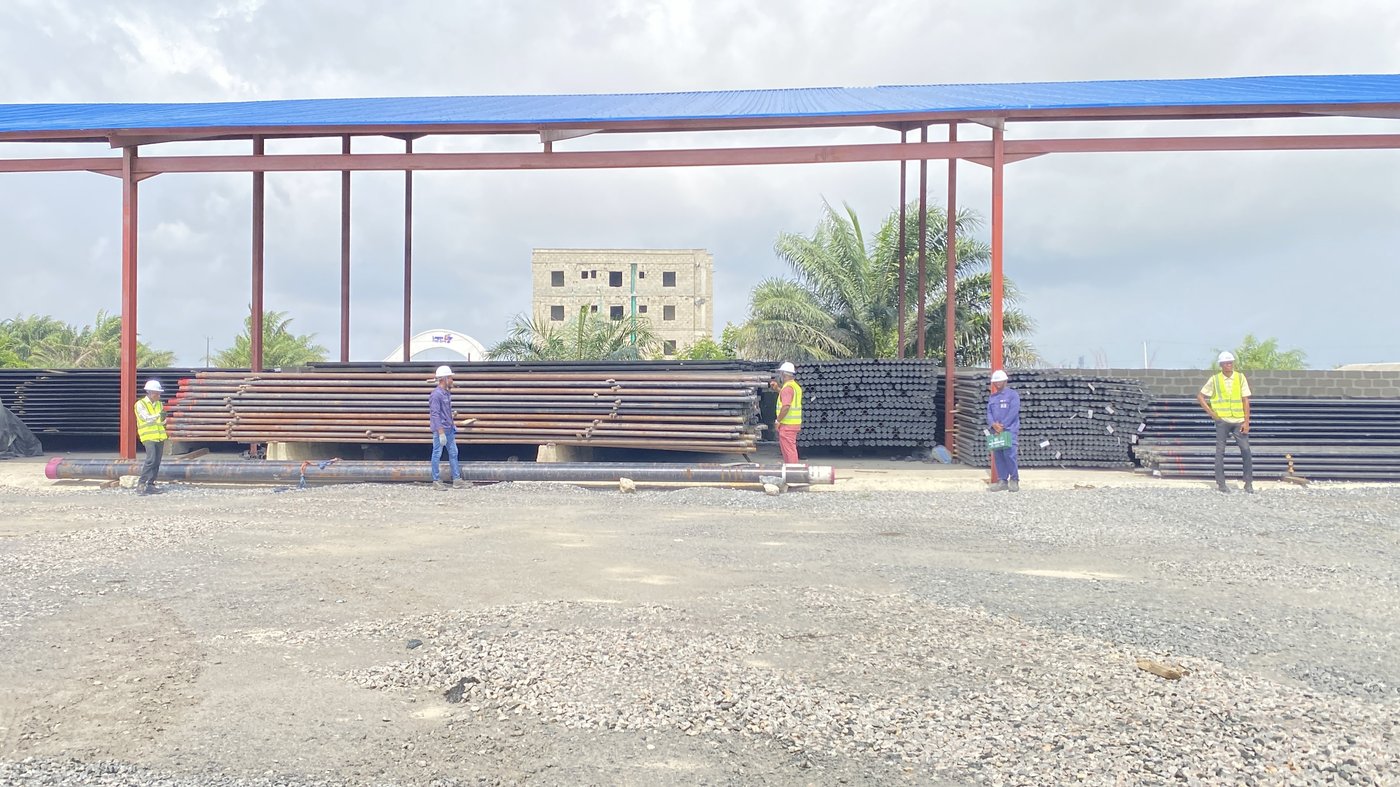
The Spine of a Well, and Why Getting It Wrong Changes Everything
Imagine building a skyscraper. Not upwards into the sky, but downwards, deep into the earth. Now imagine that skyscraper must hold back water, resist the crush of millions of tonnes of rock, survive temperatures that would melt ordinary metal, and endure for forty years without anyone being able to see, touch, or repair it once it is built.
That, in essence, is what an oil well is.
At the heart of this underground skyscraper is casing: a series of steel pipes, each fitted inside the other like nested Russian dolls, cemented in place to give the well its structure, its safety, and its very life. Without casing, there is no well. Without the right casing, there is disaster.
Oil Country Tubular Goods, or OCTG as the industry calls it, is the collective name for all the steel tubular pipes used in oil and gas wells: casing, tubing, and drill pipe. Every one of these pipes is governed by a document that sits, in some form, on the desk of every petroleum engineer in Nigeria: API Specification 5CT, published by the American Petroleum Institute. In Nigeria, the Nigerian Upstream Petroleum Regulatory Commission (NUPRC) requires all operators to meet or exceed this standard before a well programme is approved.
But API 5CT is not a one-size-fits-all solution. It is, in fact, a menu. And selecting the wrong item from that menu, even by just one grade, has sent Nigerian engineers scrambling for workover rigs at a cost of millions of dollars.
The question isn’t just what kind of steel to use. It’s what the earth has hidden, and whether your steel is ready for it.
The Anatomy of a Nigerian Well: Five Layers of Steel, Five Lines of Defence
A typical Nigerian oil well is not a single pipe sunk into the ground. It is a cascade of nested steel strings, each one serving a different protective purpose.
The Five Casing Strings: Your Well’s Armour
- Conductor casing (20″–30″ OD): the outermost ring; set in the first 30–100 metres to stabilise the shallow surface and support the wellhead. Think of it as the well’s foundations.
- Surface casing (13-3/8″ OD): protects freshwater aquifers and provides a barrier against shallow gas. Critical in Niger Delta wells, set between 300 and 800 metres.
- Intermediate casing (9-5/8″ OD): the problem-solver. Seals off overpressured zones, lost circulation intervals and, crucially, H₂S-bearing sands. Set at 1,500–4,000 metres.
- Production casing (7″ OD): the champion. Run to total depth, isolating the reservoir and housing the completion equipment. The most critical string for long-term well integrity.
- Liner (4-1/2″–7″ OD): the cost-saver. A partial string hung inside the previous casing in deep sections, used to reach target depth without the expense of a full string.
Each of these strings demands a different grade of steel, chosen not by guesswork, but by rigorous engineering analysis. And that is where our story truly begins.
Cracking the Code: The Language of API 5CT Grades
There is a code embedded in every oil well in Nigeria. You will not find it on any map, but it is written in steel, in heat, and in molecular science. It looks like this: J55. L80. P110. Q125.
These are not random alphanumeric strings. They are a classification system: a grading code developed by the American Petroleum Institute that tells an engineer, at a glance, exactly what a pipe is made of, how it was processed, and what it can endure.
The rule is elegantly simple: the number after the letter represents the pipe’s minimum yield strength in thousands of pounds per square inch (ksi). So J55 has a minimum yield of 55 ksi; P110 has a minimum of 110 ksi. The higher the number, the stronger and, generally, the more expensive the steel.
Strength alone is not the only battle. Some enemies of steel are invisible, and they strike in ways no mechanical test can fully predict.
The Grades, One by One
Let us walk through each grade as if descending a well, starting at the surface where demands are modest, and moving deeper, where the earth becomes merciless.
H40: the foundation stone. With a minimum yield strength of 40 ksi, it is the softest grade in the API 5CT family. H40 was never designed to fight great pressures; it anchors the beginning of a well in the soft, waterlogged terrain of the Niger Delta, where formation pressures are negligible and what matters most is structural support for the wellhead above.
J55: Nigeria’s workhorse. If H40 is the foundation stone, J55 is the brick that builds the house. It is the most widely deployed OCTG grade in Nigeria, and indeed across the world, striking a sweet spot between mechanical performance and cost at shallow-to-moderate depths.
BRADE Group’s own supply records tell a revealing story: J55 in sizes 9-5/8″ and 13-3/8″ has constituted the bulk of volumes supplied to Nigerian operators, with over 2 million feet of tubing and 500,000 feet of casing supplied since 2012: a reflection of how much of Nigeria’s upstream market sits at moderate onshore depths.
Critical Limitation of J55
J55 is not sour service-rated. In fields where hydrogen sulphide (H₂S) is present, even unexpectedly, deploying J55 or N80 is a gamble that has cost Nigerian operators dearly. Always conduct H₂S screening before specifying J55 for intermediate or production depths.
N80 vs. L80: Twins With a Fatal Difference
This is where the story takes a twist that has cost unwitting engineers millions of naira, and in some cases, far worse.
N80 and L80 look almost identical on the surface. Both have a minimum yield strength of 80 ksi. Both are used for intermediate and production casing. On a quick scan of a specification sheet, an inexperienced engineer might treat them as interchangeable.
They are not.
N80 is a workhorse for moderate-depth sweet wells: the Agbada Formation at 2,500 to 4,500 metres is its natural home. It has no hardness limit, making it simpler and cheaper to manufacture.
L80 is N80’s cousin: outwardly similar, but engineered with one critical extra specification: a maximum hardness of 23 HRC. That constraint is the difference between a pipe that survives H₂S and one that does not.
Why Hardness Matters in H₂S Environments
Hydrogen sulphide (H₂S) is a colourless, extraordinarily toxic gas found in many Nigerian reservoirs. At sufficient concentrations, it triggers a process called Sulfide Stress Cracking (SSC) in high-hardness steels.
SSC works like this: the H₂S molecule attacks the steel at the atomic level, causing hydrogen atoms to diffuse into the metal. These hydrogen atoms collect at stress points: microscopic cracks, inclusions, or grain boundaries, and cause the steel to fracture from the inside out, often without visible warning.
High-hardness steel is disproportionately vulnerable. L80’s hardness cap of 23 HRC keeps the steel below the danger threshold. N80 has no such cap, and in a sour well, that can be catastrophic.
C90 and T95: The Specialists
Descending deeper into the Nigerian subsurface, past the Niger Delta’s familiar shallow sands and into the high-pressure, high-temperature (HPHT) zones of the deepwater blocks: two more grades enter the story: C90 and T95.
Both are sour-service rated, manufactured through quench-and-temper heat treatment, and certified to meet the requirements of NACE MR0175/ISO 15156, the international standard governing materials in H₂S-containing environments. C90 handles moderate H₂S concentrations; T95 steps in when conditions become more severe. Nigeria’s deepwater blocks are precisely the environments where these grades earn their place.
P110: The Deep King
If there is a grade that defines Nigeria’s deepwater ambitions, it is P110. With a minimum yield of 110 ksi, more than double that of J55, P110 is the product of quench-and-temper processing that transforms ordinary steel into a material capable of withstanding the extraordinary mechanical loads of a deepwater well. In Nigeria’s deepwater complexes, P110 is the standard choice for production casing and liners, where design loads can reach collapse pressures above 85 MPa and burst pressures above 100 MPa: loads that would crush a J55 pipe like an aluminium can.
Q125: The Frontier Grade
At the very edge of current Nigerian petroleum development sits Q125, a grade for ultra-deepwater wells and extreme HPHT conditions where the earth’s forces approach the limits of what engineered steel can endure. With a minimum yield of 125 ksi, demand for Q125 and its proprietary equivalents will only grow as pre-salt plays are developed in upcoming licensing rounds.
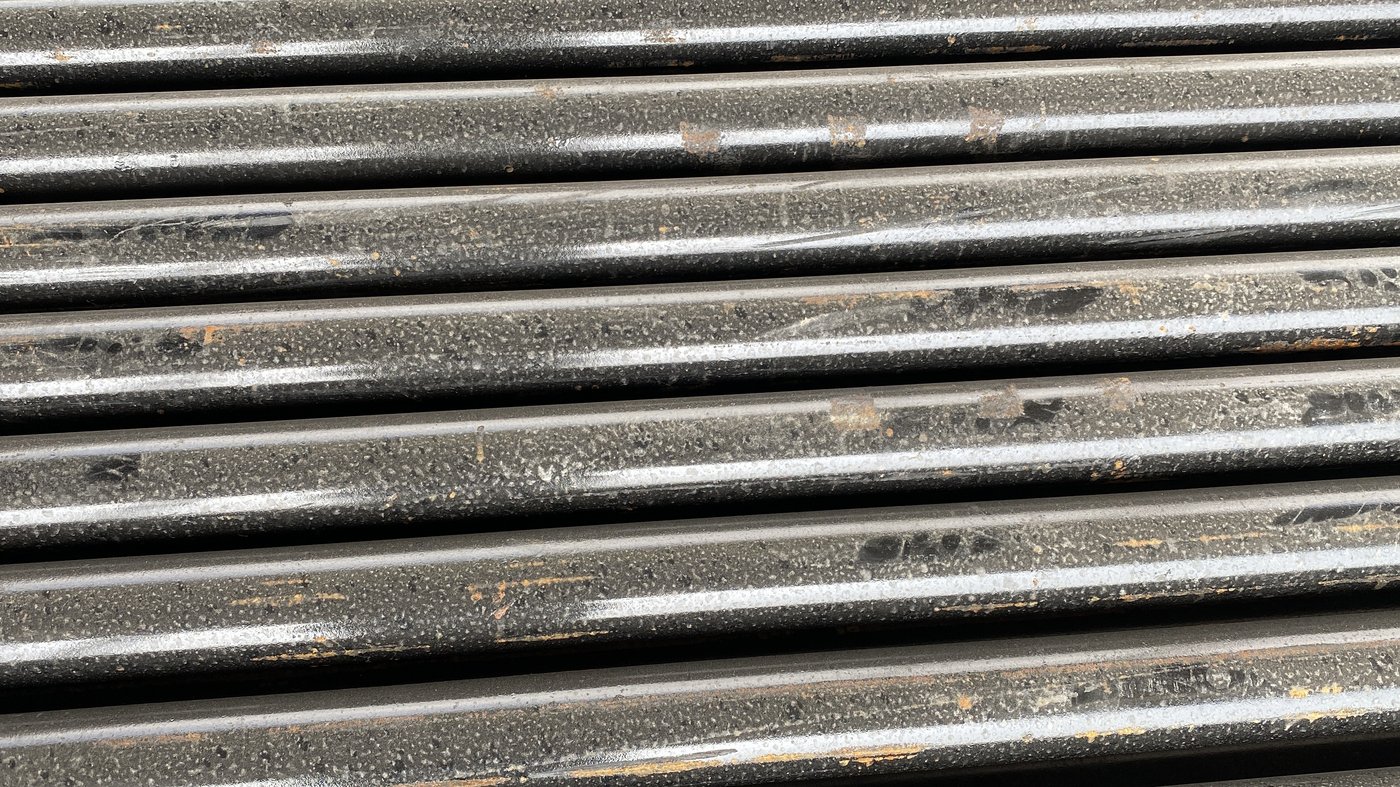
The Codebreaker’s Table: All Grades at a Glance
| Grade | Min. Yield | Min. Tensile | Max. Hardness | Best Application (Nigeria) | Sour Service |
|---|---|---|---|---|---|
| H40 | 40 ksi | 60 ksi | N/A | Conductor pipe, swampy Niger Delta | No |
| J55 | 55 ksi | 75 ksi | N/A | Surface/intermediate, Niger Delta onshore | No |
| K55 | 55 ksi | 95 ksi | N/A | Surface casing, burst-critical wells | No |
| L80 | 80 ksi | 95 ksi | 23 HRC | Sour service production casing | Yes (mild) |
| N80 | 80 ksi | 100 ksi | N/A | Intermediate/production (sweet wells only) | No |
| C90 | 90 ksi | 105 ksi | 25.4 HRC | Moderate H₂S, HPHT deepwater | Yes |
| T95 | 95 ksi | 110 ksi | 25.4 HRC | High H₂S, deepwater frontier blocks | Yes |
| P110 | 110 ksi | 125 ksi | N/A | Deepwater production, high-pressure wells | No (sweet) |
| Q125 | 125 ksi | 150 ksi | N/A | Ultra-deepwater, extreme HPHT | No |
The Five Tests: Choosing the Right Grade for Any Nigerian Well
A petroleum engineer selecting casing grade is, in a very real sense, a detective. The well has not yet been drilled. The reservoir is hidden kilometres below the surface. And yet, a decision must be made: one that will determine whether this well produces for a generation or fails within months.
Test 1: What Are the Mechanical Forces?
At its core, casing engineering is a battle against three mechanical forces. Collapse resistance counters the external pressure from formation rock and drilling mud pushing inward. In the geopressured zones of the Agbada Formation, pore pressures can reach 90% of overburden pressure, creating severe collapse loads on uncemented casing sections. Burst resistance counters internal pressure from reservoir fluids and gas pushing outward; a well control event can subject casing to burst pressures far exceeding normal operating conditions. Tensile and compressive axial loads come from the weight of the string itself, compounded by thermal expansion and the mechanics of running pipe through a curved or deviated wellbore.
Engineers use the formulas in API TR 5C3 to calculate these loads and select grades that meet required safety factors: 1.125 for collapse, 1.1 for burst, and 1.6 for tension.
Test 2: What Does the Earth Hide? The Corrosive Environment
If mechanical loading is the obvious enemy, corrosion is the invisible one. Nigeria’s oilfields present a full spectrum of corrosive conditions, and the engineer who ignores them does so at enormous peril.
The Corrosion Classification Ladder
- Sweet service (no H₂S detected): J55, K55, N80, P110 are acceptable for their respective depth/pressure ranges.
- Mildly sour (H₂S between 300–10,000 ppm in the gas phase): L80 or C90 required. N80 is explicitly prohibited under NACE MR0175/ISO 15156.
- Severely sour (H₂S above 10,000 ppm): T95 or proprietary Corrosion-Resistant Alloy (CRA) grades required: 13Cr, 22Cr duplex stainless steel.
- HPHT sour deepwater (above 150°C, above 69 MPa): proprietary alloys only: 28Cr, Inconel-based materials.
CO₂ tells its own story too. A CO₂ partial pressure above 0.05 MPa triggers corrosion concerns that must be factored into material selection, conditions under which engineers have had to make a complete departure from carbon steel toward 13Cr martensitic stainless steel for production tubing.
Test 3: How Hot Does It Get?
Steel, like all materials, weakens under heat. Standard API grades are rated at 25°C, but Nigeria’s deepwater wells encounter temperatures of 100–130°C at depths of 1,500–2,000 metres below mudline, and in some HPHT wells, temperatures exceed 150°C. At these temperatures, engineers must apply thermal de-rating factors to their design calculations, effectively reducing the credited yield strength of the selected grade. Failure to account for thermal de-rating has contributed to casing failures in HPHT wells globally.
Test 4: How Does the Pipe Connect?
A chain is only as strong as its weakest link. In casing design, that weakest link is often not the pipe body itself; it is the threaded connection that joins one joint to the next. Standard API BTC (Buttress Thread Coupling) connections work well in conventional, vertical wells, but for high-pressure wells, deviated wellbores with extreme angular doglegs, and severe thermal cycling, they are insufficient. For these demanding conditions, premium connections from manufacturers such as Hydril, VAM, and TenarisBlueDock are specified; in Nigeria’s deepwater and HPHT wells, premium connections are not optional. They are mandated by sound engineering practice.
Test 5: Is the Supply Chain Trustworthy?
Here is a truth that no technical specification can fully address: Nigeria has a documented problem with counterfeit and sub-standard OCTG, with pipes bearing API certification marks from mills that have never been audited, Mill Test Certificates disconnected from the heats they purport to describe, dimensional variations that only become apparent after joints are run downhole. These are not hypothetical risks. They are documented occurrences that NUPRC has responded to with increasingly stringent supply chain requirements.
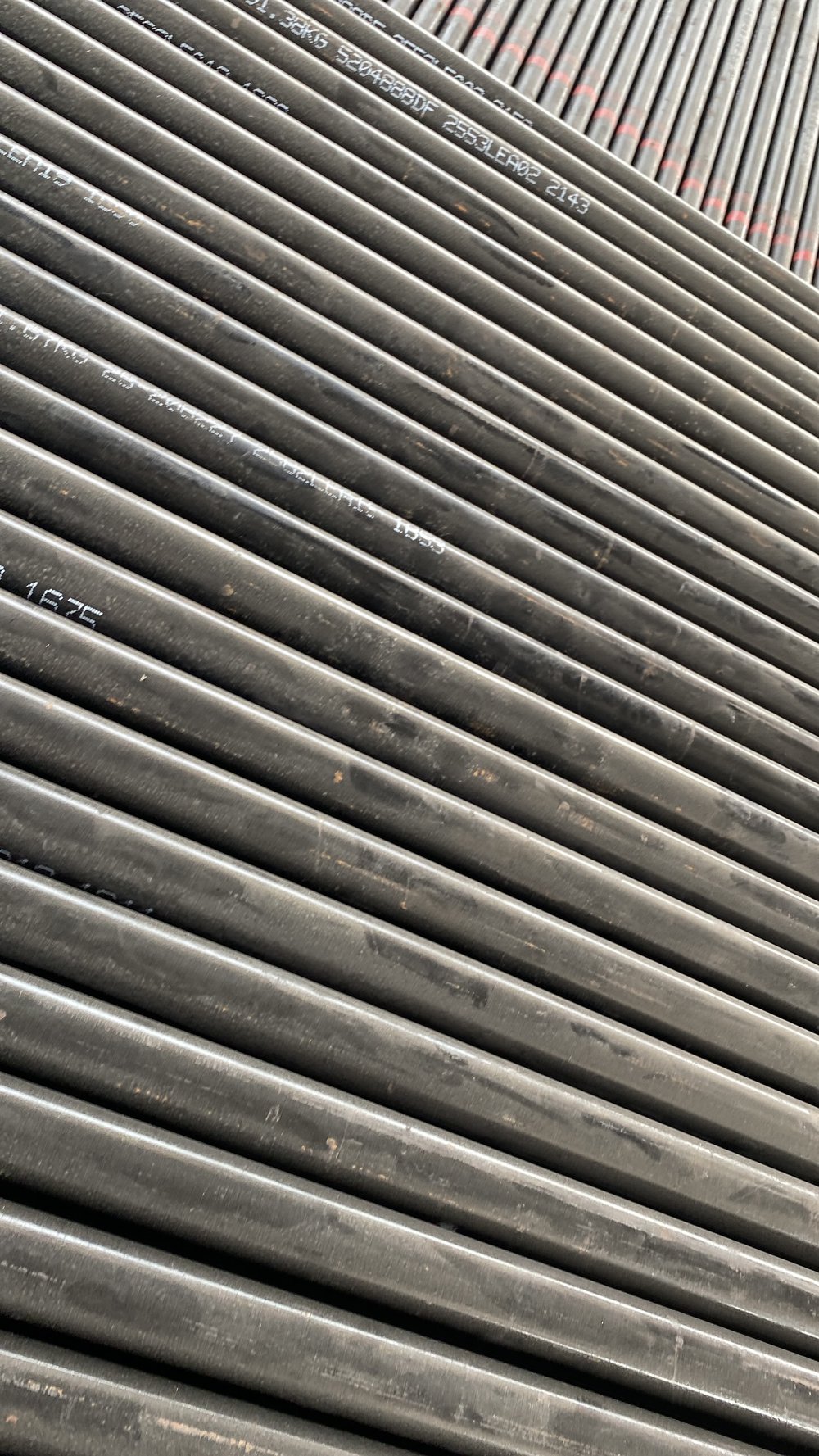
The Five Safeguards of OCTG Procurement in Nigeria
- Demand Mill Test Certificates (MTCs) traceable to the specific heat/lot number of each pipe.
- Commission third-party dimensional and mechanical inspection at the source mill.
- Verify API 5CT Monogram licensing for all manufacturing facilities before placing orders.
- Conduct API 5B and 5CT compliance testing on threads and couplings.
- Maintain full documentation traceability from mill to wellsite: a paper trail that must survive regulatory inspection.
Tales From the Field: Three Lessons Written in Steel
The most powerful teacher in engineering is failure. The following three case studies, drawn from real Nigerian operational experience, illustrate what happens when grade selection goes right, and when it goes catastrophically wrong.
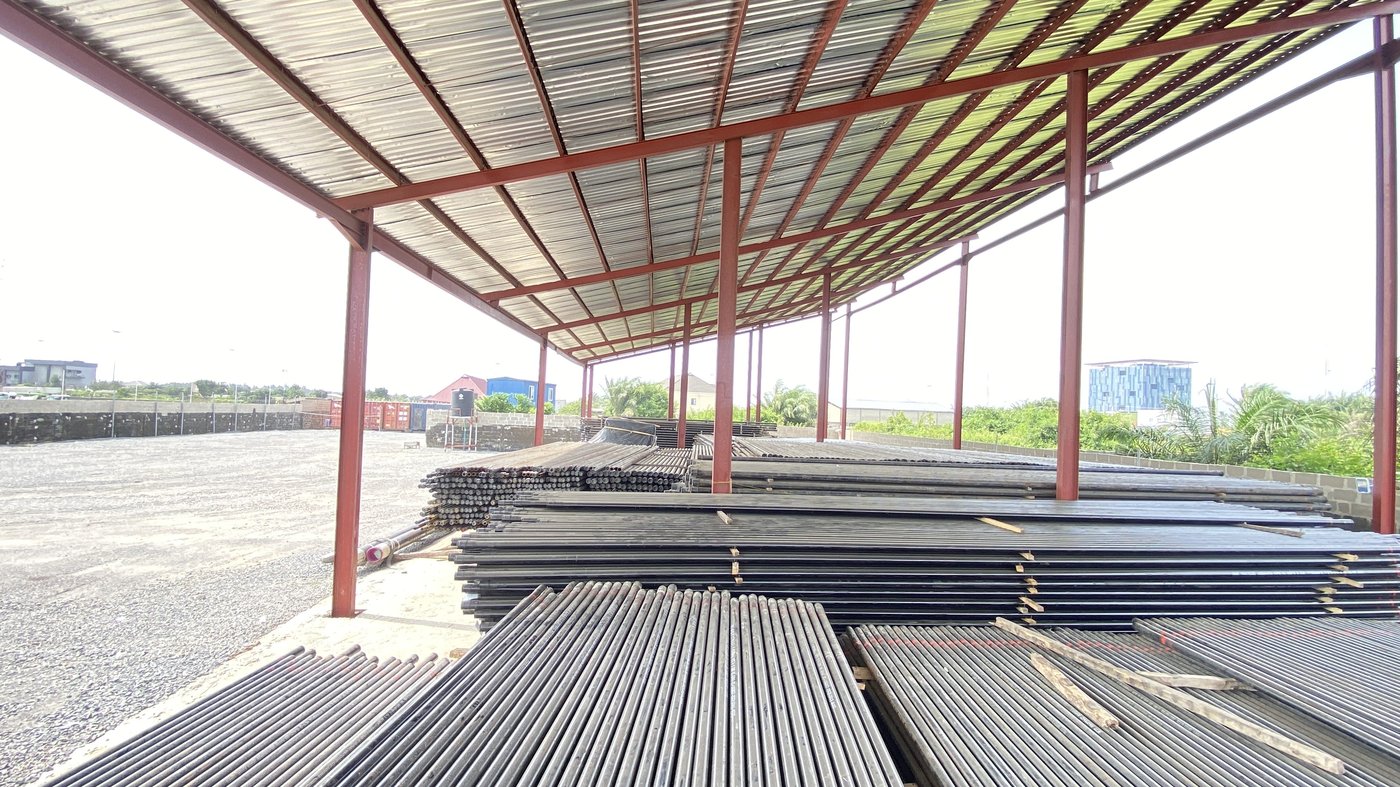
Case Study 1: The Hidden Fault, When N80 Met the Gas It Wasn’t Ready For
It began as a routine well. A Nigerian operator had drilled numerous wells in this part of the Niger Delta, and historical data showed H₂S concentrations consistently below the sour service threshold. The decision to use N80 production casing, cheaper than L80 and adequate for the sweet service environment the data described, seemed entirely reasonable.
But the earth had a secret. Deep below the target formation, hidden behind a fault seal that no seismic survey had detected, lay a compartment charged with H₂S at 1,200 ppm. The new well penetrated it. The N80 casing, with no hardness control and no sour service certification, was suddenly bathing in a gas for which it was never designed.
Within eight months, sulfide stress cracking had propagated through the production casing wall. The result was uncontrolled gas release, a well integrity emergency, and a workover intervention that cost USD 12 million.
The Lesson
The incremental cost of upgrading from N80 to L80 is approximately 8–12%: often just a few hundred thousand dollars on a well programme. The cost of the workover: USD 12 million. In Nigeria, well integrity failures can cost between USD 5 million and USD 50 million once environmental remediation, regulatory penalties, and reputational damage are included. Seen in this light, the upgrade cost is not a premium. It is insurance.
Case Study 2: P110 Conquers the Deep
Thousands of metres below sea level, a 7″ production liner faced conditions that would have broken lesser steel: a collapse load of 87 MPa, a burst load of 102 MPa, and axial tension of 1,850 kN from the liner’s own weight. Only one grade was up to this task.
P110, fitted with premium VAM TOP connections, was selected. The grade’s collapse rating of 98 MPa, burst rating of 115 MPa, and body yield of 2,240 kN exceeded every design load with the required safety factors to spare. The well was completed on schedule. The liner holds to this day. This is what correct grade selection looks like: not dramatic, not glamorous. Just a well that works.
Case Study 3: The CO₂ Challenge, When Carbon Steel Was Not Enough
In one deepwater development, production tubing faced a different kind of invisible enemy: carbon dioxide. At CO₂ partial pressures of 0.4 MPa and reservoir temperatures of 125°C, standard carbon steel grades face corrosion rates exceeding 5 mm per year, meaning standard casing would fail within three years of production commencement.
The solution was 13Cr martensitic stainless steel, a grade that provides excellent CO₂ corrosion resistance up to 130°C. The cost was significantly higher than carbon steel. The alternative, replacing failed tubing every three years, would have been ruinous.
Sometimes the most dangerous enemy is not the one that attacks violently; it is the one that works slowly, silently, and invisibly, until the day it does not.
The Well That Lasts
Somewhere beneath the Nigerian earth, a steel pipe is holding the line right now. It has been down there for years, perhaps decades. No one can see it. No one will service it until a rig is called and the well is shut in. Yet everything, the revenue, the jobs, the energy supply, the operator’s reputation, depends on that pipe remaining intact.
The engineer who selected its grade may never know whether they got it right. If they did, they will never hear about it. The well simply produces, year after year. If they got it wrong, however, everyone will hear about it.
Sound OCTG selection is not a single decision: it is a discipline that integrates reservoir geochemistry, mechanical engineering, corrosion science, regulatory compliance, and supply chain quality management. In Nigeria’s diverse operating environments, from the shallow swamps of the Niger Delta to the ultra-deepwater frontier of the Gulf of Guinea, there is no universal answer. The correct grade must be determined well-by-well, horizon-by-horizon, with every tool of the engineer’s craft brought to bear.
The companies that do this well, that invest in proper data gathering, rigorous API 5CT application, conservative sour service classification, certified procurement, and independent inspection; they build wells that stand the test of time. They protect their clients’ assets. They safeguard Nigeria’s petroleum resources for generations yet to come.
The next well drilled in Nigeria will be a test. Will its casing pass?
The Decoder’s Handbook: Key Terms Explained
For readers unfamiliar with the language of oil and gas, every industry has its own dialect. Here is a plain-language guide to the essential vocabulary of casing grade and material selection.
- API 5CT
- The American Petroleum Institute’s specification governing the manufacture, testing, and classification of all OCTG used in oil and gas wells globally: the industry’s rulebook for steel pipes.
- OCTG (Oil Country Tubular Goods)
- The collective name for all steel tubular products used in oil and gas wells: casing, tubing, and drill pipe. If it goes downhole, it’s OCTG.
- Casing
- Steel tubular pipes inserted into a drilled wellbore and cemented in place to give the well structural integrity, isolate geological formations, prevent contamination of freshwater aquifers, and contain downhole pressures.
- Yield Strength (ksi)
- The stress a pipe can endure before permanently deforming. The number in every API 5CT grade name is this minimum yield strength: J55 yields at minimum 55 ksi, P110 at minimum 110 ksi.
- Sour Service
- A well environment in which hydrogen sulphide (H₂S) is present above thresholds defined by NACE MR0175/ISO 15156, requiring specially graded steels (L80, C90, T95) that resist sulfide stress cracking.
- H₂S (Hydrogen Sulphide)
- A colourless, highly toxic gas occurring naturally in many reservoirs. At sufficient concentrations it causes sulfide stress cracking (SSC), particularly in high-hardness steels.
- Sulfide Stress Cracking (SSC)
- A form of hydrogen embrittlement in which H₂S causes high-hardness steel to fracture from the inside out, with little or no visible warning.
- NACE MR0175 / ISO 15156
- The international standard specifying which materials can be used in sour (H₂S-containing) oil and gas environments.
- Collapse Resistance
- A casing pipe’s ability to withstand external pressure from formation rock and drilling mud pushing inward.
- Burst Resistance
- A casing pipe’s ability to withstand internal pressure from reservoir fluids and gas pushing outward.
- Quench-and-Temper (Q&T)
- A heat treatment process that transforms steel’s microstructure to achieve high strength and controlled toughness, required for grades such as P110, C90, and T95.
- HPHT (High Pressure, High Temperature)
- Wells where bottom-hole pressures exceed 69 MPa and/or bottom-hole temperatures exceed 150°C, requiring premium-grade materials and specialised design.
- Mill Test Certificate (MTC)
- A quality document issued by the steel manufacturer certifying that a specific pipe meets the chemical, mechanical, and dimensional requirements of the applicable standard.
- CRA (Corrosion-Resistant Alloy)
- Specialty steel alloys, such as 13Cr, 22Cr duplex, and Inconel-based materials, used when standard carbon steel cannot survive a well’s corrosive conditions.
- NUPRC
- The Nigerian Upstream Petroleum Regulatory Commission: the government body regulating Nigeria’s upstream petroleum sector under the Petroleum Industry Act (PIA) of 2021.
- Premium Connection
- A threaded casing connection that goes beyond standard API BTC specifications to provide superior sealing and performance in deviated, high-pressure, or thermally demanding wells.
- Liner
- A partial casing string that does not extend to the surface, but is hung from inside the bottom of the previous full-length casing string to reduce cost in deep sections.
- Agbada Formation
- The primary oil-producing geological formation in the Niger Delta, consisting of alternating sand and shale layers deposited between roughly 2,000 and 5,000 metres depth.
References & Further Reading
- American Petroleum Institute. API Specification 5CT, 11th Edition, 2024. Casing and Tubing for the Oil and Gas Industry.
- NACE International. MR0175/ISO 15156: Materials for Use in H₂S-Containing Environments. Houston: NACE, 2015.
- Nigerian Upstream Petroleum Regulatory Commission (NUPRC). Upstream Petroleum Safety Regulations, 2024.
- BRADE Group OCTG Procurement Records and Technical Documentation, 2012–2025.
- Petroleum Industry Act (PIA), 2021, Federal Republic of Nigeria.
- American Petroleum Institute. API Technical Report 5C3: Design Calculations for Casing and Tubing. Washington D.C.: API, 2024.